
How to Check Criminal History in Hart
Start by naming the event, not by asking one office for every Hart record. A citation in a fine-only city matter belongs at the municipal court. An incident narrative belongs with the law-enforcement agency that created it. A booking or present custody question belongs with the Castro County Sheriff's Office and jail. Felony and Class A or B misdemeanor case files are kept by the appropriate county clerk. Texas Department of Public Safety records are yet another layer: they reflect reportable events sent to the state repository and do not replace the source file.
- Call Hart's city and court number to confirm the current municipal record custodian and whether a matching city docket exists.
- Identify the agency that made the stop, wrote the report, or carried out the arrest before requesting a police narrative.
- Ask the Castro County Sheriff about current local custody and use sheriff-linked VINELink as a separate notification channel.
- Contact the Castro County clerks when the matter moved beyond a fine-only city case into county misdemeanor or district felony court.
- Use the official DPS name search for public Texas repository information, or the fingerprint review process when checking your own full Texas record.
The correct Hart sequence depends on what happened and when. A Hart citation may never create a county jail entry. By contrast, a Hart arrest can create an agency report, jail intake record, magistrate record, clerk file, and DPS arrest cycle. Search each Hart layer for the fact that office is meant to answer.
Hart Court Records Without a Portal
The current Texas Office of Court Administration directory lists Hart Municipal Court but does not list a Hart online case search, payment portal, or copy fee. The verified Hart route is direct contact. Ask whether Hart staff can search by full name, citation or case number, and date of birth when lawfully useful. Also ask what Hart years are indexed, whether a paper file must be retrieved, how copies can be sent, and what cost applies. A clear Hart request is more useful than a broad demand for a person's entire Hart criminal history.
Use the current Hart court listing as a contact snapshot, not as a promise that every Hart detail will stay fixed. The state directory supplies PO Box 329, Hart, TX 79043-0329; telephone 806-938-2171; fax 806-938-2046; and cityhart@amaonline.com. Call or email Hart before placing documents in the mail. No official Hart source in the research publishes counter hours, a public terminal, or a guaranteed response time.
The Hart Police Department
Current official sources do not establish a staffed Hart Police Department records unit, public report page, request form, mobile app, blotter, or active city arrest search. Older Texas DPS compliance material contains a “HART PD” label. That historical label shows that the name appeared in an earlier reporting setting, but it does not prove the present department structure or identify today's report custodian. The reverse is also true: omission from a newer table does not prove that no city law-enforcement function exists.
For a Hart incident, first ask Hart which agency handled the event. If the Castro County Sheriff, a Texas DPS trooper, or another agency created the Hart report, direct the request to that creator. A written Texas Public Information Act request should state the Hart incident date, approximate time, location, agency, report number if known, and the exact item sought. Do not ask the Hart court to supply a police narrative it may never have received.
Note: Confirm the current Hart report custodian before sending a request, since an old agency label is not a current records address.
Hart Record Context by Census
The official Census profile for Hart provides place-level context without claiming to measure crime or court activity.
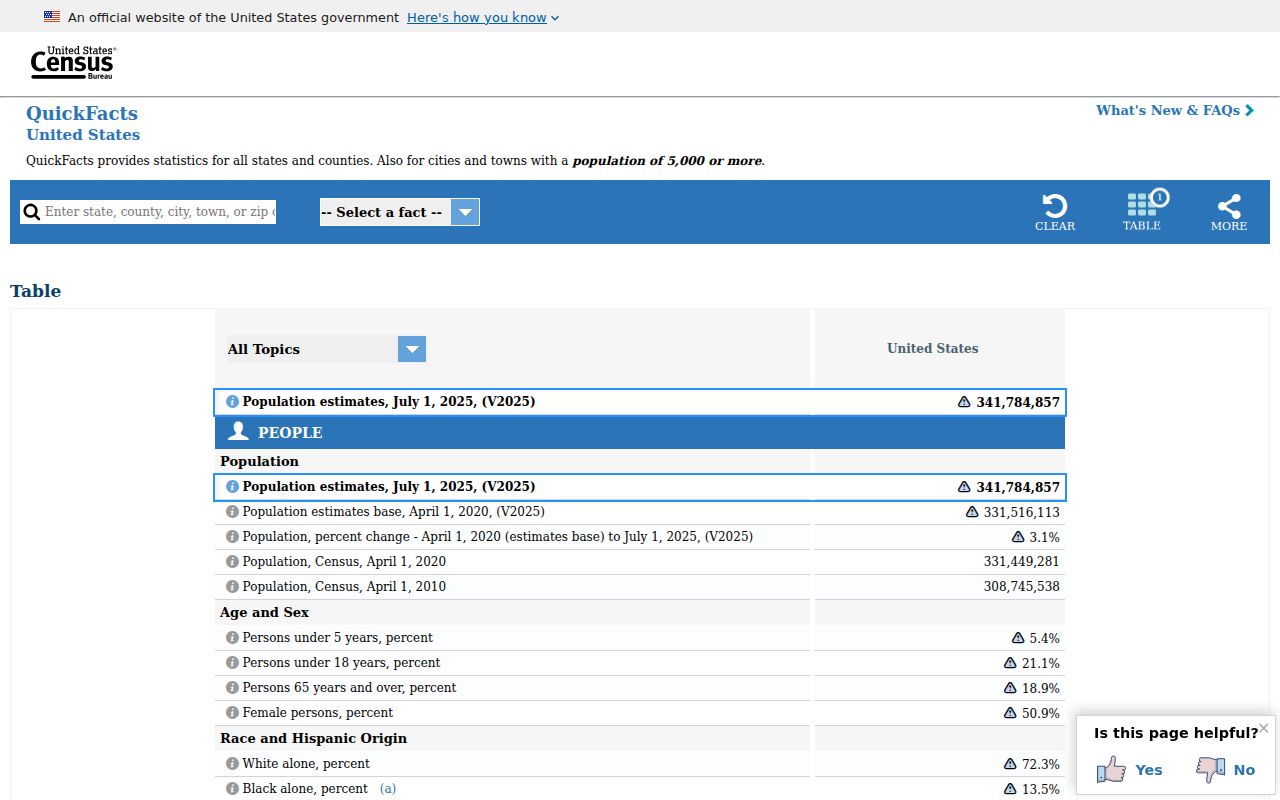
The profile keeps Hart's city geography distinct from Castro County totals, an essential distinction when judging whether a statistic actually describes Hart records. The 2020 Decennial Census P1 count was 869, making Hart the county's second-largest incorporated city in the official ranking used for these Hart record pages. Hart population is not a crime count, booking count, or court caseload. It only identifies Hart as a defined place and shows the scale of the Hart community.
TxDOT mapping places Hart in southern Castro County around SH 194, FM 145, and FM 168, near the US 87 and I-27 corridor. That road setting can involve city, sheriff, or state enforcement. The location of an event does not by itself identify who holds the incident report. Look at the citation, booking entry, report number, or arresting-agency name before choosing a records office.
Arrests and Bookings in Hart
No official Hart jail, booking roster, arrest log, or app was found. For a recent Hart-area arrest, call the Castro County Sheriff's Office and jail at 806-647-3311. The office is at 900 E. Bedford Street, Dimmitt, TX 79027. Give the full name and date of birth if staff permits, then ask whether the person is in local custody, which agency booked the person, the booking date, the intake charge, and the court or bond authority. A current custody answer is not a complete Hart arrest history.
The sheriff links VINELink for participating custody status and notifications. VINELink can help track a custody change, yet it is not a historic booking ledger and very recent intake data may not appear at once. If the person is not in the Castro County jail, the result does not show that no Hart arrest occurred. Release, transfer, agency reporting, and system timing can all affect what is visible.
A written request is the stronger route for an older Hart booking. Identify a Hart date range and ask for the booking sheet or jail register entry, not an open-ended criminal-history report. Then obtain the Hart incident narrative from the arresting agency and the filed Hart case from the clerk. Those Hart records can use different charge wording because intake allegations may change after prosecutor review.
Historic Hart Police Records Labels
A common search trap is treating any old government table as proof of the current Hart records path. Agency names, reporting arrangements, and staffing can change. A dated “HART PD” entry is evidence about that source at that time. It is not enough to infer a current public counter, email address, case portal, or archive location. Ask Hart and the sheriff to identify the creator and present custodian before filing a request.
Search results also readily mix Hart, Texas, with Hart, Michigan. The Michigan city's website is not a valid source for a Texas municipal case or police report. Check the state, ZIP code, county, and telephone area code on every result. Hart's verified municipal contact uses Texas ZIP 79043-0329 and area code 806. This small check prevents a request from going to an unrelated court more than a thousand miles away.
Hart Municipal Court Records
Hart Municipal Court is the city-level place to ask about fine-only municipal matters within its jurisdiction. Such a file is not the same as a Castro County felony or Class A or B misdemeanor file. Begin with the state directory contact and describe the case with enough detail for staff to locate an existing docket. When no number is known, supply the legal name, an approximate date, and the type of citation. Ask staff to confirm which identifiers they accept.
| Court Name | Hart Municipal Court |
|---|---|
| Case Types Heard | Fine-only city and Class C matters within municipal jurisdiction; confirm the precise filing with court staff. |
| Case Lookup Channel | Phone, email, fax, or mail through the current OCA directory contact; no verified public search box. |
| What the Docket Shows | When maintained and releasable, the case number, charge, filing events, settings, plea, judgment, and payment status. |
| Copies & Fees | No public copy price was located; confirm availability, certification, total cost, and delivery before mailing. |
Do not mail cash or assume a payment satisfies a request. A records copy, court payment, and formal appearance are different acts. Since the Hart source does not publish those procedures online, ask the clerk what the docket requires and retain the response with your request.
What Hart Court Records Confirm
The OCA directory is strongest for confirming that a Hart court listing exists and for supplying its published Hart contact data. It does not by itself show a person's Hart charges, disposition, active warrant, or custody. Nor does it establish that all Hart matters stay at the city level. A Hart municipal listing answers “where can I ask about this city docket?” rather than “what is this person's whole criminal history?”
Use the Hart telephone and email first when a request depends on an unknown fee, format, or archive period. Ask for the Hart case number and docket status before ordering a copy. If Hart staff says the matter belongs elsewhere, note the named court and custodian. That handoff can save time because Castro County's district and county-level criminal files are handled through the clerks at the county courthouse in Dimmitt.
Where Hart Records End Up
A reportable Hart arrest can move through more than one system. The arresting agency creates the incident or arrest report. Castro County jail staff may create an intake record and transmit fingerprints and identifiers for a reportable offense. A magistrate creates warnings and bond material. Prosecutors decide what to file, and the proper clerk maintains the case docket, pleadings, judgment, and sentence. Clerks and prosecutors then report qualifying dispositions to the Texas Department of Public Safety.
Record flow: Hart arresting agency › Castro County Courts › Texas Department of Public Safety
This flow explains why a fresh Hart booking can appear before a court case and why the final filed charge may differ from the intake charge. It also explains why a no-result search proves little by itself. The event may be in another court, still awaiting filing, absent due to reporting lag, restricted by law, or indexed under different identifiers. For a full county-level account of the clerk and repository layers, use the broader Castro County criminal history overview.
Missing Hart Crime Record Counts
No verified city-only Hart crime series was found in the official sources used for this project. That gap must not be restated as zero crime, zero arrests, or proof of safety. A number can be absent because of agency boundaries, reporting status, a source's selected year, or the way an event was classified. County totals are not a substitute because they include places outside Hart and can combine work by several agencies.
When a number matters, record the agency, geography, year, and measure. Calls for service, incidents, arrests, bookings, filed cases, and convictions count different things. A single event can produce several of them. For a person's own case, source documents are more useful than an aggregate rate: request the agency report, verify custody, and read the clerk's filed disposition.
Hart City and County Records
The charging level determines which court record to seek. Hart Municipal Court handles matters within its city jurisdiction. Castro County's constitutional County Court traditionally handles Class A and B misdemeanors, while the 64th and 242nd Judicial District Courts hear Castro County felony matters. Justice Court addresses its own fine-only and warrant jurisdiction. These forums are separate even when a name appears in more than one system.
Start with the Hart citation or arresting agency, then ask which court received the Hart filing. District Clerk and County Clerk contacts are published at Room 101 in the Castro County Courthouse, 100 E. Bedford Street, Dimmitt, with telephone 806-647-3338. State clearly that you need a Hart felony, county misdemeanor, or municipal file. Court staff can search existing Hart records, but the Texas Public Information Act does not require an office to create a custom Hart criminal-history summary.
Public Access Rules
Texas access law follows the custodian. Hart city records held by a governmental body are subject to the Texas Public Information Act and its exceptions. Court records also involve judicial-access rules and clerk practice. Confidential criminal-history repository data, protected juvenile material, victim identifiers, personal data, and parts of an active investigation may be withheld or redacted. Ask for an existing named record rather than legal analysis or a new compilation.
Key Statutes:
Texas Government Code Chapter 552 grants access to existing non-exempt government information and sets request and cost rules.
Texas Government Code Chapter 411 governs criminal-history record information, DPS dissemination, and authorized access.
Code of Criminal Procedure Chapter 55A sets the process and eligibility rules for expunction.
If a Hart police or court record seems incomplete, compare it with the originating office rather than assuming the gap changes the legal outcome. A public DPS name result is narrower than a fingerprint-confirmed personal review. A municipal docket is narrower than a county search. Each official channel should be used for the record it actually holds.