
Running a Sex Offender Check in Castro County
The Texas Public Sex Offender Registry is the main public channel for Castro County. Texas Department of Public Safety maintains it as a free statewide service. Begin there for a person who lives in Dimmitt, Hart, Nazareth, or an address outside city limits. A local police or sheriff contact can answer registration-office questions, but Castro County does not publish a separate county registry search or map.
Use more than a name when possible. A common name may produce several profiles, and an address pin may not appear even when a record exists. Compare the public photograph, birth date, aliases, physical description, reported address, and registering agency. If an address or compliance status looks wrong, contact the verification agency on that profile. Call 911 only for an emergency, not for a routine profile question.
Castro County Registry Contacts
Chapter 62 generally sends a registrant who lives inside a city to the law-enforcement authority designated for that city. A person outside city limits generally reports to the county authority. The research verifies a public records contact for Dimmitt Police, but it does not establish registration hours, appointments, or fees for either local office. Call first and state the residence location so the agency can confirm jurisdiction.
Dimmitt Police Department
115 W. Jones Street
Dimmitt, TX 79027
806-647-4545
Castro County Sheriff
900 E. Bedford Street
Dimmitt, TX 79027
806-647-3311
Hart and Nazareth residents should confirm the authority named by law rather than assume the sheriff or a city office is correct. The Castro County Sheriff's Office and Dimmitt Police Department pages supply the verified local contact routes. The official Castro County directory is the fallback for confirming which county office now holds a local duty. Staff can also confirm whether an appointment is needed before travel.
Searching the Texas Public Sex Offender Registry
The Texas registry offers three useful search paths. A map-address search is best for neighborhood awareness. A name search is better when identity facts are known. An institute-and-campus search addresses higher-education records. Search controls can change, so read the live page before entering data.
- Open the official Texas registry and review its lawful-use and identity warnings.
- Choose an address map, a first-and-last-name search, or the institute and campus route.
- Use birth date when available, then compare each possible Castro County match with several profile traits.
- Open the full profile, note its verification agency, and contact that office about a possible error or compliance issue.
The official Texas search form shows the fields a Castro County searcher will meet.
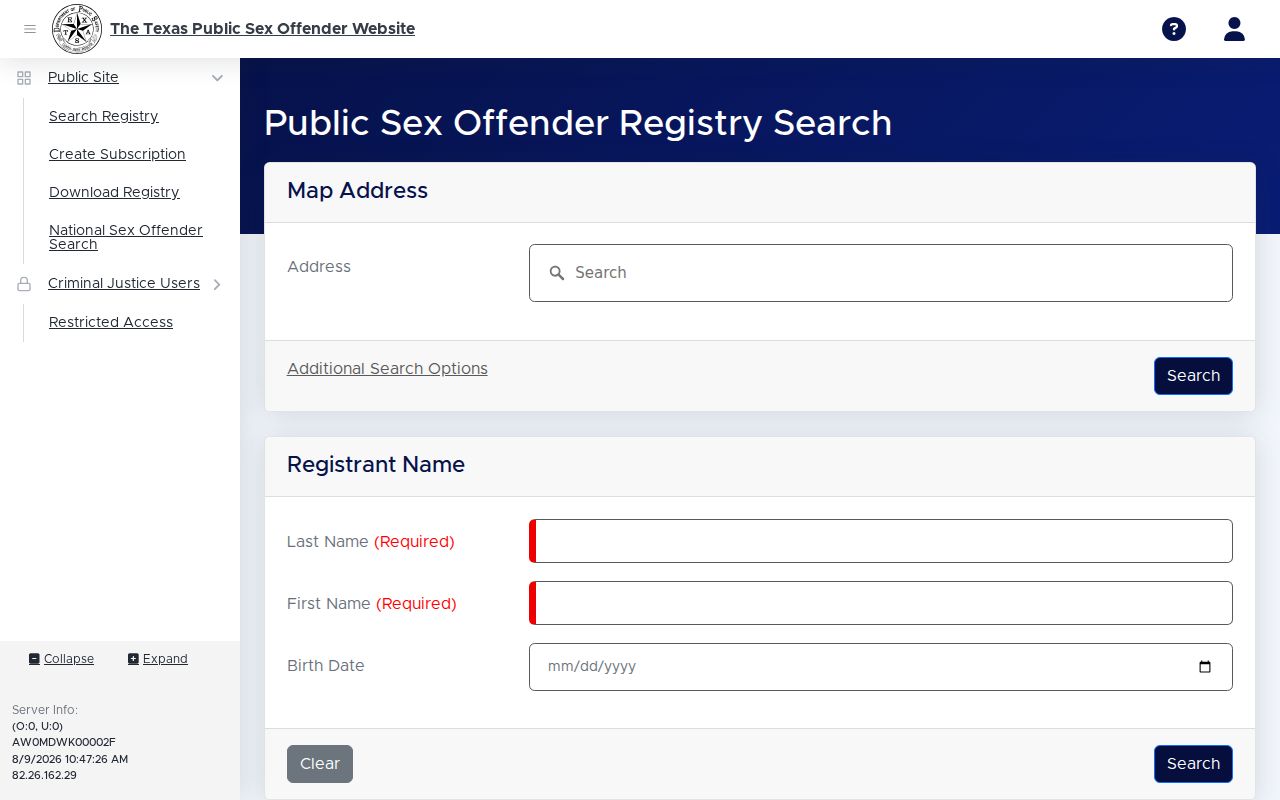
The screen makes the split between map, name, and campus searches clear before a user reviews any Castro County result.
| Field Label | Type | Required | Notes |
|---|---|---|---|
| Map Address | Address, autocomplete, map | For address route | Some registered addresses may remain unmapped. |
| Last Name | Text | Yes for name route | Use with first name and confirm the result. |
| First Name | Text | Yes for name route | Birth date can narrow likely matches. |
| Birth Date | Date | No | An optional identity filter. |
| Institute | Dropdown | For campus route | Select from the official list. |
| Campus | Dependent dropdown | For campus route | Options depend on the institute. |
Castro County Registry Map Gaps
An empty spot on a map is not the same as an empty registry. The Texas interface notes that some registered addresses remain unmapped. Rural routes, address formatting, or map matching can affect what a Castro County user sees. Run a name search as a second route when a known person does not appear near an expected location.
A map pin also should not be treated as proof about every person at a home. Read the linked profile, check the reported residence or mapped-location wording, and compare identity details. For a possible error, use the registering or verification agency displayed on the profile. That office is better placed to review the underlying Castro County registration record than a map alone.
What a Registry Profile Shows
A public Texas profile combines identity, registration, and offense facts. It may include aliases, date of birth, physical traits, a current photograph, primary address or mapped location, status, risk level, reportable offense, and the agency that verifies the record. Some vehicle, higher-education, mark, scar, and tattoo details can appear when collected and public under law.
| Name & Aliases | Published names used to distinguish one person from another. |
|---|---|
| Photo & Description | Photograph, sex, race, height, weight, hair, eyes, and identifying marks when public. |
| Registered Location | Primary residence, address, or mapped-location information available to the public. |
| Offense & Statute | Reportable offense, legal citation, and conviction or adjudication date. |
| Texas Risk Display | Level 1, 2, 3, or a Civil Commitment label when applicable. |
| Registration Status | Duration or lifetime status, compliance details, and the verification agency. |
| Kept Nonpublic | Victim identity, Social Security number, private phone, online identifiers, and other DPS-only data. |
Some juvenile registration can remain off the public site by judicial order. Therefore, no public result does not prove that no legally restricted record exists.
Castro County and NSOPW Coverage
The Texas registry is the first stop for a Texas address. The National Sex Offender Public Website, operated by the U.S. Department of Justice, adds a federated search across participating jurisdictions. This helps when a person may have moved across a state line or when a family is comparing more than one past location.
The official NSOPW search page shows the national entry point assigned to this Castro County topic.
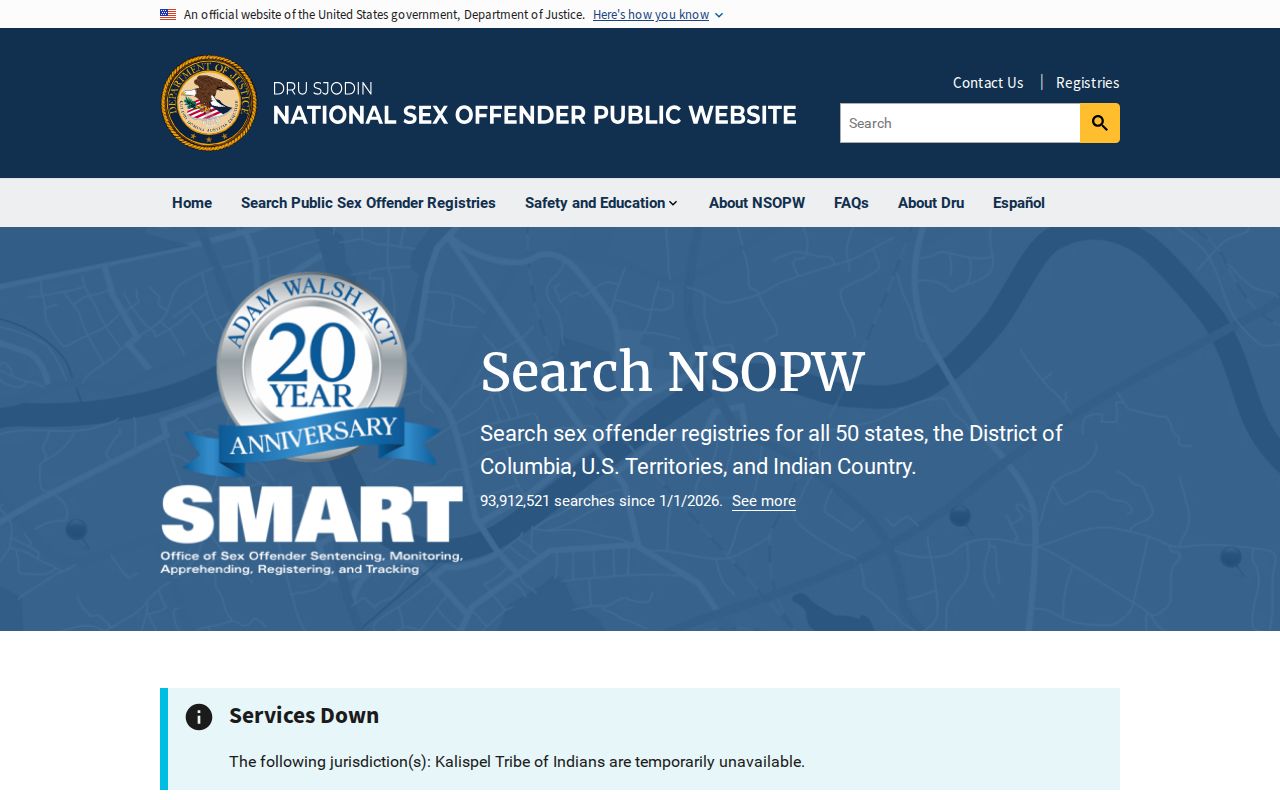
NSOPW broadens geography, but the source jurisdiction still controls the record and must answer questions about its content.
Neither channel guarantees that each address maps cleanly or that a person with a similar name is the same person. For a Castro County match, return to the Texas profile and its verification agency. For an out-of-state match, follow the source-jurisdiction link supplied by NSOPW.
Registration Requirements and Levels in Texas
Texas risk numbers describe assessed danger and notification, not the length of a registration duty. Article 62.101 generally sets adult registration for life or until ten years after discharge from the relevant supervision, based on the reportable offense and statutory schedule. Juvenile rules differ. Do not translate a Texas risk number into a federal SORNA Tier I, II, or III duration.
| Texas Display | Risk Meaning | Duration Rule |
|---|---|---|
| Level 1 | Low danger; not likely to reoffend sexually | Offense and statute control, not the level. |
| Level 2 | Moderate danger; may continue | Offense and statute control, not the level. |
| Level 3 | Serious danger; expected to continue | Offense and statute control, not the level. |
| Civil Commitment | Separate civilly committed predator status | Do not convert it to a SORNA tier. |
Read the current Texas Code of Criminal Procedure Chapter 62 for a specific offense. The statute, discharge date, and case facts matter more than the display number.
Castro County Registry Subscriptions
The Texas navigation includes Create Subscription and Download Registry options. A subscription account can send email notices when the database changes. It can help a Castro County resident track a chosen area without repeating the same search each day, but a notice does not by itself mean that there is an immediate danger.
The Texas registry landing page presents those search and notice tools with the state's warnings.
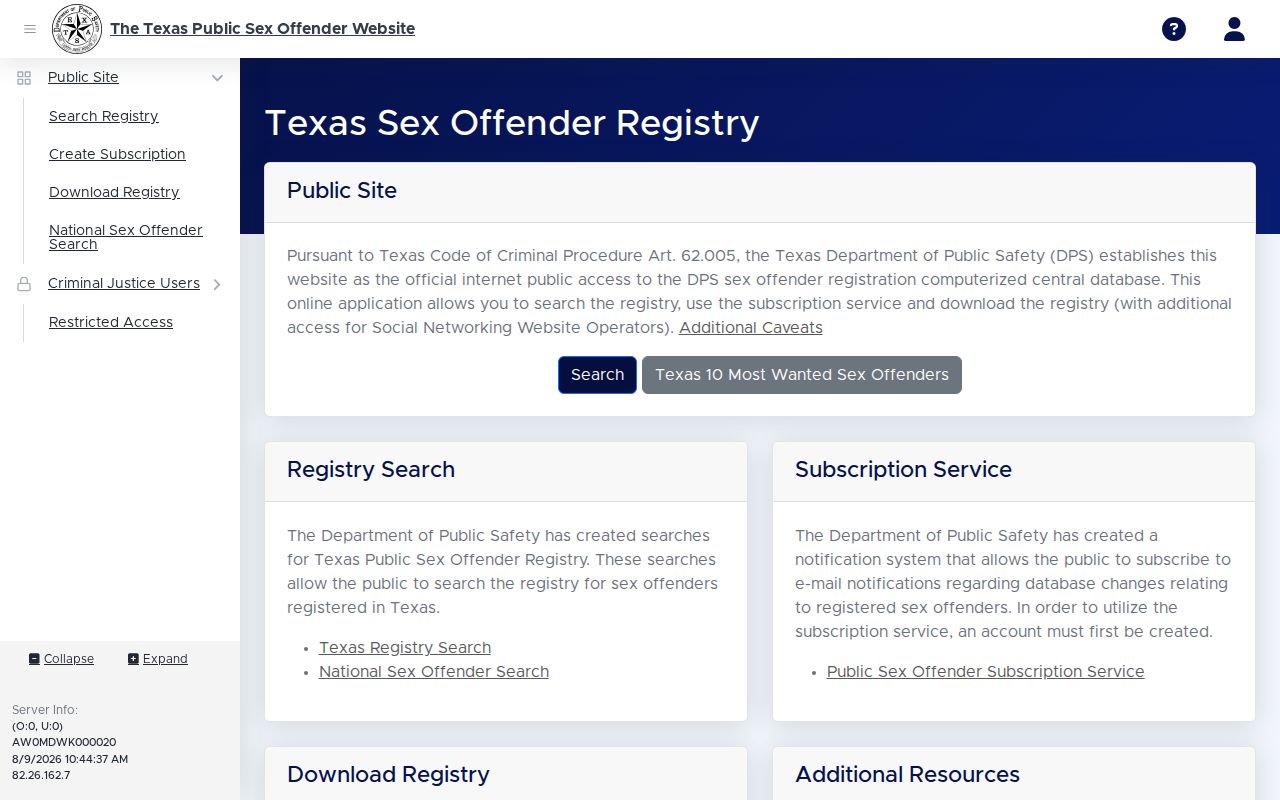
The state page keeps search, subscription, download, and national access in one official channel for Castro County readers.
Use the profile's agency contact for a data concern. If a subscription message describes a move, confirm the profile before drawing a conclusion about the person, the address, or the timing of the update.
Castro County Residency Rule Limits
Texas does not support a blanket claim that one statewide distance rule applies to every registrant. A restriction can arise from a specific supervision condition or a valid local rule. The person's status, offense, court orders, and exact jurisdiction may change the answer. A map circle is therefore not a legal ruling about where a person may live.
For a Dimmitt address, contact Dimmitt Police about the local authority and verify any claimed city rule. For land outside a city, contact the Castro County Sheriff. Hart and Nazareth residents should first confirm which office Chapter 62 designates. This careful route avoids turning a broad safety concern into an unsupported legal claim.
Lawful Use and Community Notification
Registry records exist for awareness and safety planning. Texas may use English and Spanish postcards for high-risk or civil-commitment community notification and may provide local school notices when Chapter 62 requires them. Those notices do not replace the live profile, and the profile does not authorize private enforcement.
Use registry information lawfully: Texas Code of Criminal Procedure Chapter 62 warns that injury, harassment, threats, intimidation, or other unlawful misuse can create criminal or civil liability. Do not use a Castro County registry result for vigilantism or discrimination.
Report an apparent error or noncompliance to the verification agency listed in the Castro County profile. Give staff the profile details and the fact that seems wrong. For immediate danger, call 911. For community awareness, use the state's official search and subscription tools, confirm identity, and keep the limits of public data in view.